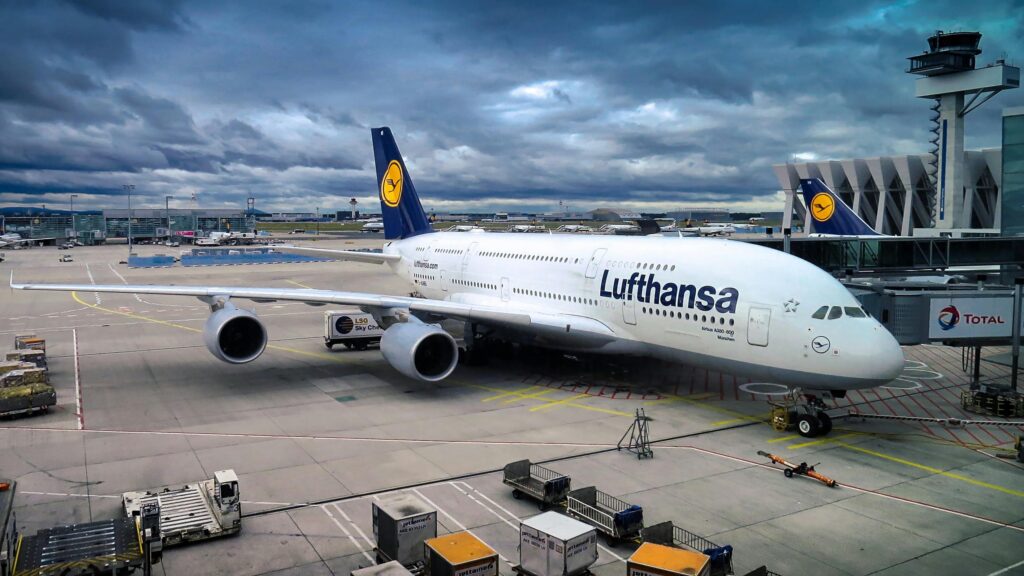
When the Airbus A380 first took to the skies in 2005, it completely changed the world’s perception of what commercial flight could be. It wasn’t just another aircraft—it was a flying city, a masterpiece of engineering and comfort that reminded everyone why aviation captures the imagination. Even today, years after Airbus ended its production, the A380 remains a marvel admired by passengers, pilots, and aviation enthusiasts alike.
Let’s take a closer look at what makes the Airbus A380 so special, exploring its design, performance, comfort, and lasting legacy in aviation.
Table of Contents
1. The Birth of a Giant
The Airbus A380 was developed to compete with Boeing’s 747 and to serve the growing demand for long-haul, high-capacity travel between major international hubs. Airbus wanted to build something extraordinary—a jet that could carry more passengers, fly farther, and do so more quietly and efficiently than any aircraft before it.
When it first flew, the A380 became the largest passenger aircraft ever built. Its full double-deck design was a first in aviation history. The idea was simple: by carrying more passengers on a single flight, airlines could reduce congestion at busy airports and lower the cost per seat. But what Airbus created went far beyond numbers—it built a new experience for travelers.
2. Two Full-Length Decks – A Flying City
The most distinctive feature of the A380 is its two full-length passenger decks. No other airliner offers this. Depending on the airline’s layout, the A380 can carry up to 800 passengers in an all-economy setup or around 555 in a three-class configuration (first, business, and economy).
Walking inside an A380 feels like stepping into a luxurious cruise ship. Some airlines, like Emirates and Singapore Airlines, have used the space to install lounges, bars, and even showers—amenities once unthinkable in commercial aviation. The wide fuselage—about 6.5 meters across—gives airlines the freedom to design spacious cabins that never feel cramped.
3. Comfort beyond Expectation
Passengers often describe flying on the A380 as one of the most comfortable experiences in the air. The aircraft is exceptionally quiet, thanks to advanced sound insulation and engine noise reduction. Even during takeoff, the cabin remains calm and peaceful.
Airbus also designed the cabin environment with well-being in mind. The A380 maintains a lower cabin altitude—around 5,000 to 6,000 feet—helping passengers feel less tired after long flights. The air filtration system refreshes the cabin air every few minutes, while LED mood lighting gently adjusts to simulate natural daylight, helping reduce jet lag.
Whether sitting in economy or first class, passengers benefit from wider seats, more legroom, and larger overhead bins. The sense of spaciousness is one of the A380’s most beloved traits.
https://www.airbus.com/en/products-services/commercial-aircraft/passenger-aircraft/a380
4. Inside the Cockpit – Where Technology Meets Precision
Despite its enormous size, the A380 is flown by just two pilots. This is possible thanks to Airbus’s advanced fly-by-wire technology, where computers interpret pilot inputs and control the aircraft’s flight surfaces electronically. This system improves precision, stability, and safety.
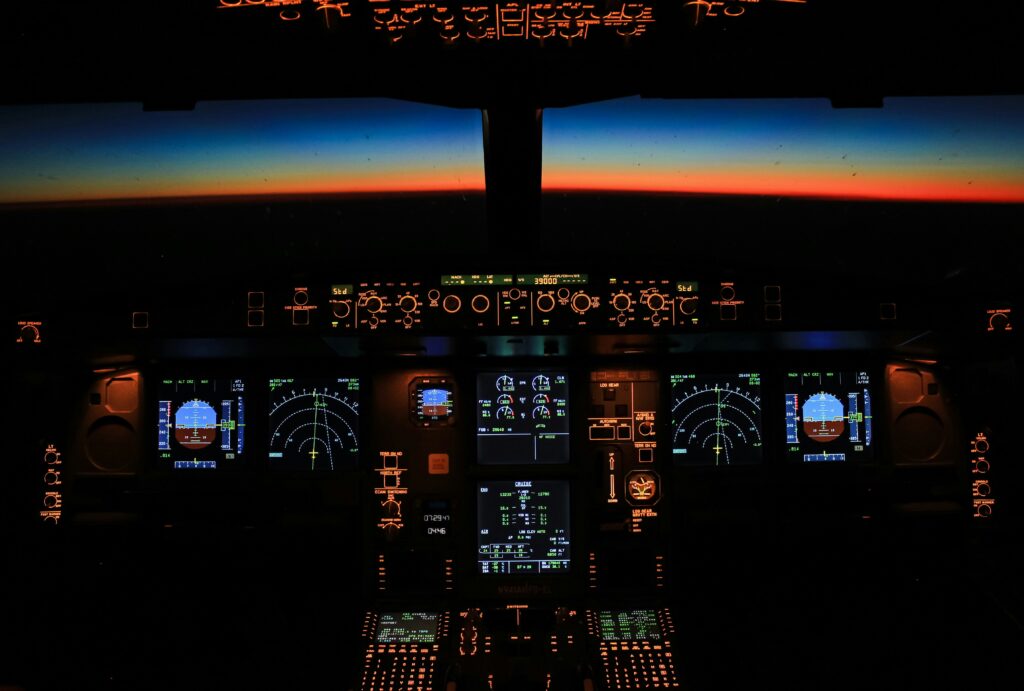
The cockpit layout follows Airbus’s common design philosophy, meaning pilots trained on smaller Airbus models can transition smoothly to the A380. The cockpit includes eight large LCD displays, providing information about flight parameters, navigation, and systems.
The pilots sit on the upper deck, giving them a commanding view of the runway and excellent situational awareness. Airbus also introduced an Onboard Maintenance System (OMS) that monitors the aircraft’s health in real time, detecting issues early and supporting predictive maintenance—an innovation that keeps this giant flying smoothly.
5. Power and Performance
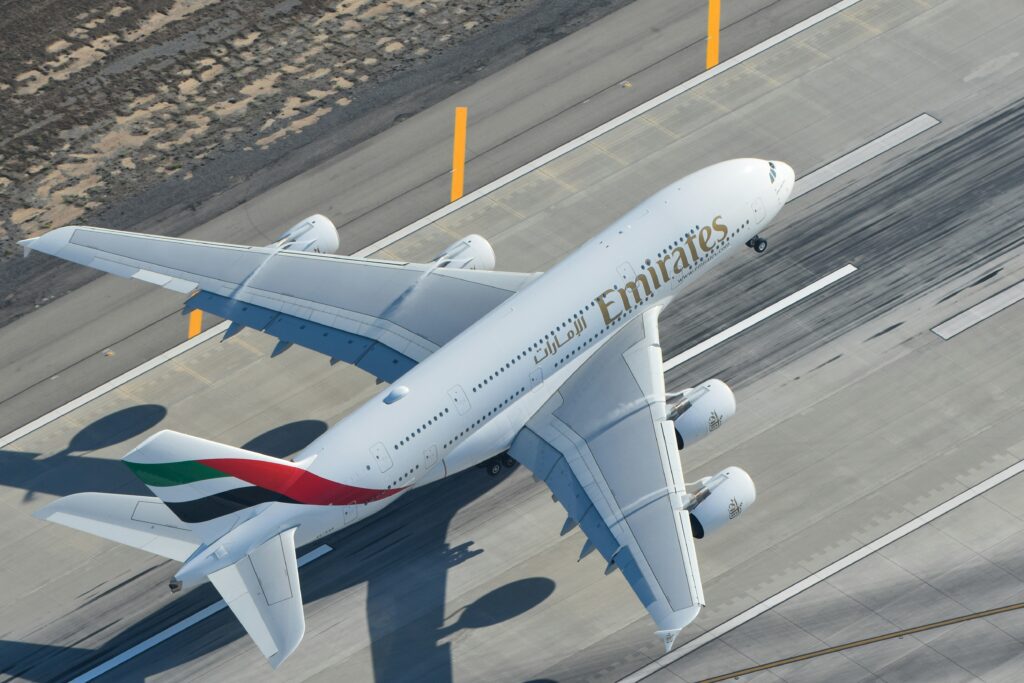
The A380 is powered by four enormous engines—either the Rolls-Royce Trent 900 or the Engine Alliance GP7200. Each engine produces up to 70,000 pounds of thrust, enough to lift a fully loaded jet weighing up to 560 tonnes (1.2 million pounds).
Despite its size, the A380 cruises comfortably at Mach 0.85 (about 900 km/h or 560 mph) and can fly up to 15,200 kilometers (8,200 nautical miles) nonstop. That’s long enough to travel from Dubai to Los Angeles or London to Sydney without refuelling.
The aircraft holds 320,000 litres (84,500 gallons) of fuel, and although it burns more per flight than smaller aircraft, its per-seat efficiency is impressive when fully loaded. This makes it one of the most efficient aircraft for dense, long-haul routes.
6. Built to Handle the Weight of the World
Supporting such a massive aircraft requires incredible engineering. The A380 features 22 wheels across five landing gear units, distributing its immense weight safely across runways and taxiways. Its carbon brakes and brake-by-wire system ensure smooth and controlled landings.
The aircraft’s wings—among the largest ever built for a commercial jet—are designed for maximum lift and fuel efficiency. They are flexible, with elegant upward curves (winglets) that reduce drag. Each wing alone is almost the size of a Boeing 737.
Around 25% of the A380’s structure is made from lightweight composite materials, such as carbon-fibre reinforced plastic, which helps reduce weight and improve fuel performance.
7. A Home for the World’s Best Airlines
Operating an A380 isn’t for every airline. The aircraft requires special airport infrastructure—wider taxiways, stronger runways, and dual or triple boarding bridges to load passengers efficiently. Only about 140 airports worldwide are certified to handle it.
The A380 falls under ICAO’s Code F classification, the highest standard for civil aircraft. Airports like Dubai, London Heathrow, Singapore Changi, and Sydney upgraded their facilities to accommodate it, including stronger pavement, high-capacity jet bridges, and larger gates.
Among its most famous operators are Emirates, Singapore Airlines, Qatar Airways, British Airways, Lufthansa, and Qantas. Emirates alone operates nearly half of all A380s ever built, using it as the flagship of its long-haul network.
8. Cabin Crew and Onboard Service
An aircraft this large requires a significant cabin crew—often 20 to 25 members, depending on the airline’s layout. These professionals handle passenger service, safety, and hospitality across both decks. The A380’s size allows airlines to offer exceptional in-flight experiences: fine dining, cocktail lounges, private suites, and even showers at 40,000 feet.
Cabin crew often describe working on the A380 as a pleasure because of the spacious galleys, quiet environment, and advanced systems that make service more efficient. The onboard ambience, combined with the professionalism of the crew, turns long-haul travel into a memorable experience.
9. Passenger Love and Global Admiration
Ask anyone who’s flown on the A380, and they’ll likely describe it as the smoothest and quietest ride they’ve ever experienced. The aircraft’s size makes it remarkably stable in turbulence. Many frequent flyers even go out of their way to book A380 flights simply for the comfort.
Airlines have used the A380 on their prestige routes, such as London–Dubai, Paris–New York, Sydney–Los Angeles, and Singapore–London. For years, seeing the A380 at an airport became a spectacle—a symbol of modern aviation achievement.
10. Economic and Environmental Realities
The A380 was designed to move large numbers of passengers between big cities efficiently. However, it faced challenges in a changing aviation market. While it offers a low cost per seat when full, its cost per flight is high due to fuel, maintenance, and airport fees.
It performs best on high-demand, long-haul routes, but becomes less economical when flights aren’t full. The rise of smaller, more fuel-efficient twin-engine jets like the Boeing 787 and Airbus A350 changed airline strategies, favoring flexibility over sheer size.
Environmentally, the A380 meets ICAO’s strictest noise standards and produces lower CO₂ emissions per passenger than many older jets when operating at full capacity. However, its four engines naturally consume more fuel per trip than new-generation twinjets.
11. Challenges and Turnaround Operations
Handling an A380 on the ground is a logistical task of its own. Refuelling, catering, and cleaning such a large aircraft take longer than with smaller planes. Efficient ground handling coordination is crucial to keep turnaround times reasonable. Many airports use multiple jet bridges—two or even three—to speed up boarding and deplaning.
Despite its size, Airbus designed the A380 for ease of maintenance and high system redundancy. Electrical, hydraulic, and avionics systems have multiple backups to ensure reliability. The aircraft also features around 500 kilometres (310 miles) of wiring, carefully managed across redundant electrical systems.
12. The Decline and the Legacy
In 2021, Airbus announced the end of A380 production after delivering just 251 aircraft. The decision was based on declining airline orders and shifting market trends. The COVID-19 pandemic further accelerated the aircraft’s retirement, as travel demand dropped and smaller jets became more economical.
Yet, the A380’s story didn’t end there. As international travel rebounded, airlines such as Emirates, British Airways, Qantas, and Lufthansa brought their A380s back into service. In fact, the aircraft’s popularity among passengers continues to make it a valuable asset on busy routes.
Some A380s have found new lives as training aircraft, charters, or aviation exhibits, while parts from retired units are being turned into collectibles—fuselage panels, windows, and seats are now sought after by aviation enthusiasts.
13. A Symbol of Ambition and Engineering Brilliance
The Airbus A380 is much more than just an airplane—it is a statement of human capability. It pushed the limits of what aviation technology could achieve. With its immense size, quiet cabin, and luxurious interiors, it redefined how we think about long-distance travel.
Even though production has ended, the A380 continues to inspire the next generation of aircraft engineers and designers. It reminds us that innovation isn’t just about efficiency—it’s about imagination, comfort, and the passenger experience.
14. Why People Still Love the A380
For many travellers, the A380 represents the gold standard of comfort. From the quietness of the cabin to the smoothness of the ride, it offers something no other aircraft quite matches. Aviation enthusiasts admire its majestic take-offs, its graceful design, and the sense of awe it brings to airports.
Pilots love its technology, stability, and reliability, while cabin crew appreciate its spacious and well-organized layout. Airports are proud to host it because the A380 attracts attention and prestige.
In short, the A380 isn’t just a plane—it’s a flying experience, a symbol of aviation excellence, and a beloved icon** that continues to capture hearts around the world.
15. The Future of the Giant
Although no new A380s are being built, the aircraft will continue to fly for many years. With proper maintenance, its operators plan to keep them in service well into the 2030s. Some experts believe the A380 might even see a revival in the era of sustainable aviation fuels (SAFs), which could make large aircraft more efficient again.
Whether or not we see another giant like the A380 in the skies, its legacy is secure. It showed that air travel can be grand, peaceful, and inspiring—proof that the sky truly has no limits.
Conclusion
The Airbus A380 will always hold a special place in aviation history. It combined size, technology, comfort, and elegance in a way no other aircraft has. From its two full decks and quiet cabin to its immense range and sophisticated systems, it remains a masterpiece of modern engineering.
Even in retirement, the A380 continues to fascinate travellers and professionals alike. It is a reminder of what happens when human ambition takes flight—a symbol of progress, passion, and the timeless wonder of aviation.